 Mnemonics is an umbrella term for methods that help you remember things more easily. Names, dates, shopping lists, bits of text …
The starting point is:
Data with little or no structure, or with a structure that is too complex, is easier to remember if you can attach it to a structure you already know.
An example: you have to remember this string of letters: AUGEBAVERCAPRINDESSINE. It looks random. If you recognize four French words, auge – baver – caprin – dessine, it is already easier. Notice also that the first word has 4 letters, then 5, and so on, and that the first word starts with A, the second with B, and so on. If you know what they mean, you have made it even easier for yourself.
If you can tie something you already know to what you have to learn: do it.
Many techniques fall under *mnemonics*. A few well-known methods (ones you may already use) follow here.
The method of Loci, also known as the memory palace
Tie a procedure or a list to a virtual walk through a place you know well, for example home or school.
Take a shopping list: imagine walking through the house and putting the items down as you go. A baguette at the front door, pesto on the coffee table, cheese in the kitchen, and so on. When you later replay that walk in your head, you will remember the places — and with the places, what you put there. The weirder the combination, the easier it is to remember (milk on the toilet is apparently easier to remember than milk in the kitchen).
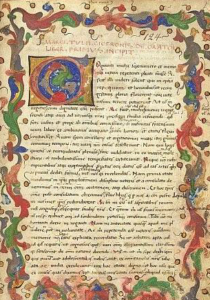 The method is widely used in memory competitions now, but it comes from antiquity. The term *memory palace* goes back to Simonides of Ceos. Cicero writes in De Oratore about Simonides, who had been invited to recite a poem at a banquet in honor of a certain Scopas. After the performance he was called outside, and the roof collapsed. The guests were crushed, but Simonides could identify the unrecognizable bodies because he remembered where everyone had been sitting. He concluded:
Those who wish to train their memory must choose places, form mental images of the things they wish to remember, and store those images in the places, so that the order of the places will preserve the order of the things, and the images of the things will denote the things themselves.
Much later, in 1491, Peter of Ravenna advised his readers — and that now includes us — to use a church building they knew well for the placement method.
The language method (natural language as the carrier)
An acronym for the colors of the rainbow (ROYGBIV), a rhyme for the alphabet (*A is for apple…*), an odd sentence for the order of the planets or the guitar strings (E-A-D-G-B-E: *Eat All Day Get Big Easy*): you probably know more children’s rhymes than you thought. The principle is sound, but coming up with something that actually works for you is not always easy. Often the simplest thing is to use the memory aids other people have already invented for you.
Music
Use rhythm and music and make a verse or a song out of what you want to remember.
One way to remember long texts is to set them to music. Many people who know parts of, or the whole, Tanakh by heart sing the text: so-called cantillation. Think back to elementary school and the alphabet song will probably surface.
But remember: the song is not the goal. Some people learned the multiplication tables by singing them, and now cannot answer 7 × 9 without singing their way there.
Tactile — the sense of touch
If doing and touching things makes a situation more real for you, movement and physical impressions may well help you remember better.
An example: PIN codes. You may not remember the PIN for your phone or bank card as a string of digits, but as a movement.